
Pharmacy Benefit Manager (PBM)
Glossary of Terms
A quick reference to help you understand pharmacy benefits.
Pharmacy benefits can feel overwhelming. This glossary provides clear, simple definitions to help you understand the most common PBM terms.
Pharmacy Benefit Manager (PBM)
Glossary of Terms
A quick reference to help you understand pharmacy benefits.
Pharmacy benefits can feel overwhelming. This glossary provides clear, simple definitions to help you understand the most common PBM terms.
No results found.
-
AWP (Average Wholesale Price):A pricing benchmark used for drug reimbursement; often higher than the actual acquisition cost.
-
Brand Drug:A medication sold under a trademarked name by a specific manufacturer.
-
Coinsurance:A percentage of drug cost the member pays, instead of a flat copay.
-
Copayment (Copay):A fixed amount a member pays for a covered drug.
-
DAW (Dispense As Written):A prescriber’s instruction to dispense a brand-name drug even if generics are available.
-
Deductible:The amount a member must pay out of pocket before benefits begin.
-
DIR Fees (Direct and Indirect Remuneration):Fees or payments that a PBM may recoup from pharmacies after the point of sale.
-
EOB (Explanation of Benefits):A summary sent to members explaining what was covered and what they owe.
-
Generic Drug:A chemically identical version of a brand-name drug, typically less expensive.
-
Generic Substitution:Dispensing a generic drug in place of a brand-name version when appropriate.
-
MAC (Maximum Allowable Cost):The upper limit a PBM will reimburse for generic drugs or brands with generics.
-
Mail Order Pharmacy:A pharmacy that delivers medications by mail, often used for maintenance drugs.
-
Limited Distribution Drugs (LDDs):Specialty drugs only available through select pharmacies.
-
Manufacturer Rebate:Payments from drug manufacturers to PBMs or plan sponsors for formulary placement or volume.
-
Maintenance Medications:Drugs taken regularly for chronic conditions like hypertension or diabetes.
-
Network Pharmacy:A pharmacy that contracts with a PBM to provide services at agreed rates.
-
Out-of-Pocket Maximum:The most a member pays in a plan year before full coverage kicks in.
-
Prior Authorization (PA):A requirement to obtain approval from the PBM before a drug is covered.
-
Quantity Limit (QL):Limits on the number of doses or refills within a given timeframe.
-
Specialty Drug:High-cost medications for complex, chronic, or rare conditions—often requiring special handling.
-
Step Therapy:A utilization management tool requiring patients to try lower-cost drugs before “stepping up”
to more expensive ones. -
Specialty Pharmacy:A pharmacy that provides specialty medications and extra support services.
-
Spread Pricing:When a PBM charges the plan sponsor more than it reimburses the pharmacy, keeping the difference.
-
Tiered Formulary:A benefit design where drugs are categorized by cost levels (Tier 1: generics, Tier 2: preferred brands, etc.).
-
U&C (Usual and Customary):The cash price a pharmacy charges for a drug without insurance.
-
Utilization Management (UM):Tools like PA, step therapy, and QLs used to manage drug use and costs.
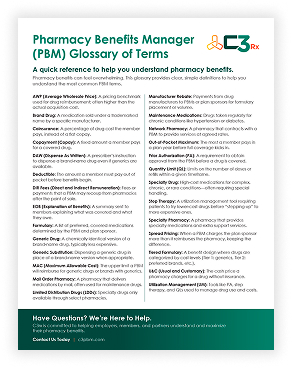
Prefer a printable or shareable version?
Download the full glossary as a PDF.
Have Questions? We’re Here to Help.
C3Rx is committed to helping employers, members, and partners understand and maximize their pharmacy benefits.